



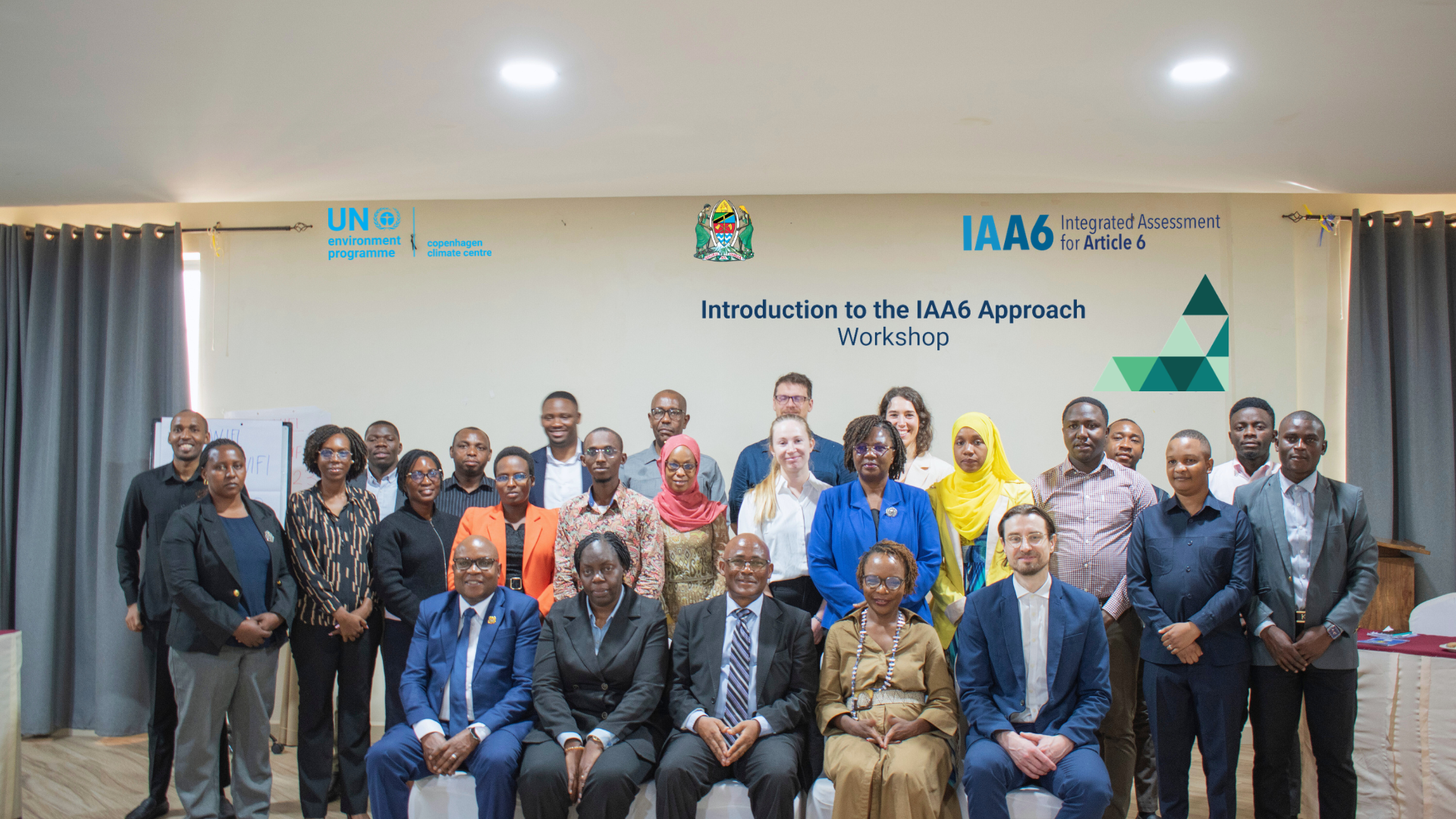
In 2025, the Vice President’s Office (VPO) of the United Republic of Tanzania, in collaboration with national and international partners, successfully convened a full-day technical workshop in Dodoma to strengthen Tanzania’s readiness and strategic positioning to use Article 6 of the Paris Agreement.
The workshop, held on 3rd December 2025 in the national capital city, was a part of the project titled “Implementation of the Development and Application of the Integrated Assessment for Article 6 (IAA6) in Tanzania”. The project is generously supported by the European Union and implemented by the UNEP Copenhagen Climate Centre (UNEP-CCC), in collaboration with Perspectives Climate Research (PCR), Climate Analytics (CA) and Climate Action Network Tanzania (CAN-Tanzania) as the national partner.
The IAA6 approach is a comprehensive and systemic framework designed to guide governments in engaging with Article 6 in a credible, ambitious, and well-coordinated manner. It provides countries with practical tools, structured guidance, and strategic insights to strengthen implementation, improve transparency, foster stakeholder engagement, and align cooperative approaches with national climate priorities. Unlike conventional technical guides, the IAA6 approach takes a holistic view linking climate policies, sustainable development, governance systems, and cooperative mechanisms to support transformational change.
Giving opening remarks, the Former Deputy Permanent Secretary (Environment), Prof. Peter Msoffe emphasized that Tanzania is firmly committed to ensuring that its engagement in cooperative carbon market mechanisms yields real, measurable, and transparent climate outcomes that directly contribute to national priorities outlined in the country’s Nationally Determined Contribution (NDC) and advancing the Environmental Sustainability and Climate Resilience Pillar of the Tanzania Development Vision 2050. He highlighted that effective participation in high-integrity carbon markets is essential to unlock climate finance, strengthen institutional readiness, and enhance national resilience. During his opening remarks, Mr Denis Machnik from UNEP-CCC highlighted that Tanzania needs a science-based strategy to leverage Article 6 carbon markets effectively to meet its climate goals.
During the workshop, stakeholders from strategic ministries were introduced to the IAA6 approach and its potential application within Tanzania’s policy landscape by Ms. Alicia Schmid, representing Perspectives Climate Research. Participants were engaged in interactive discussions on how the framework can be contextualized to reflect Tanzania’s development goals, institutional arrangements, and existing climate commitments.
The session also introduced the SiSePuede model as a novel modeling tool for projecting sectoral greenhouse gas emissions. Giving her presentation, Ms. Marie-Charlotte Geffray, an expert from Climate Analytics, emphasized that the model will support Tanzania in assessing mitigation scenarios and supporting decision-making for Article 6 implementation.
Conducting the end of the workshop reflection session, Mr. Boniventure Mchomvu from Climate Action Network Tanzania urged the participants to critically reflect on how they, and the ministries and institutions they represent, can meaningfully engage with Article 6 processes. He emphasized that effective participation requires strategic preparedness, inter-sectoral collaboration, and a clear understanding of Tanzania’s priorities in advancing cooperative approaches under the Paris Agreement
During the closing remarks, Dr. Fredrick Manyika from the Vice President’s Office acknowledged that the workshop marked an important step toward reinforcing national capacity, strengthening coordination among institutions, and ensuring that Tanzania leverages Article 6 opportunities in ways that support sustainable development and long-term climate ambition. He acknowledged the support from UNEP-CCC and the consortium implementing the project and assured them of the Vice President’s Office’s full commitment to continued collaboration, guidance, and institutional support as the initiative progresses.