Published in the American Journal of Climate Change, December 2025
By: Boniventure H. Mchomvu, Sixbert S. Mwanga, Kassim R. Mussa, Stelyus L. Mkoma
Overview
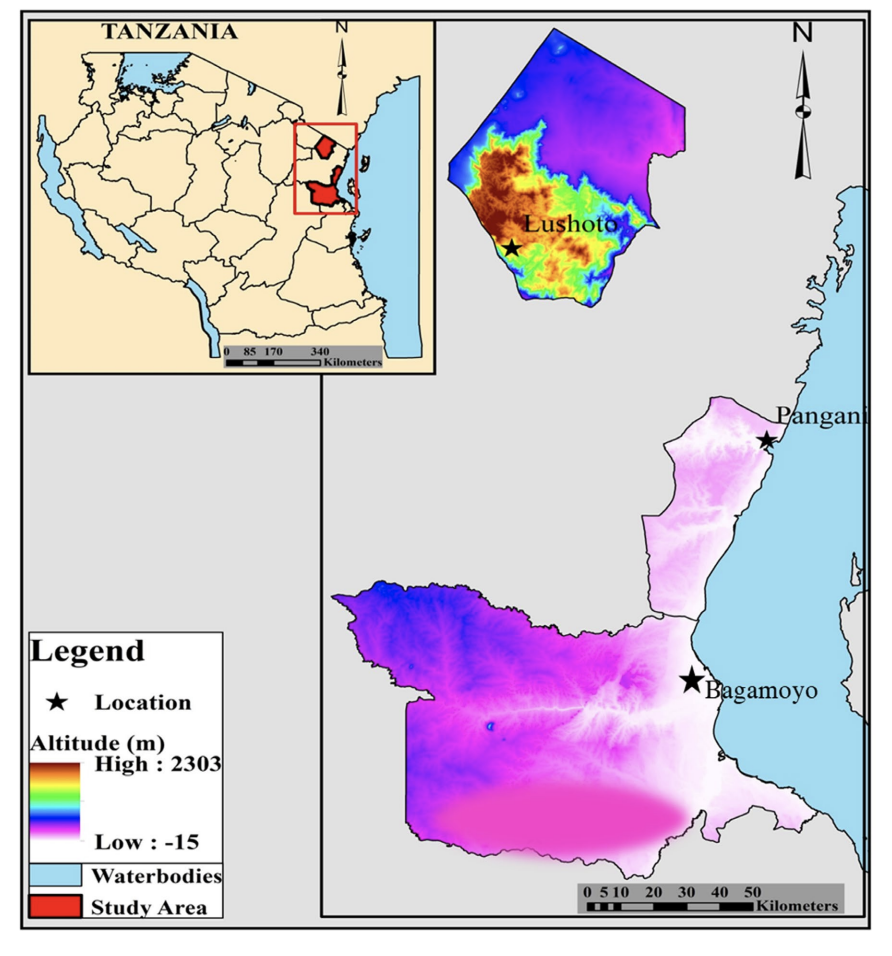
To understand how changing climate patterns affect coastal and inland communities, this study examines climate change risks and livelihood vulnerabilities in three Tanzanian villages in Lushoto and Pangani Districts, in Tanga, and Bagamoyo in Pwani District. Using both scientific and participatory methods, the authors assess how hazards such as drought, floods, sea-level rise and saltwater intrusion threaten agriculture, livestock, fisheries, housing, and incomes. The paper highlights the need for targeted adaptation actions to support community resilience
What the study did
The researchers combined key informant interviews, focus group discussions, structured household surveys, and participatory Geographic Information System (GIS) mapping to gather data from three villages. They computed three quantitative indices, including the Livelihood Vulnerability Index (LVI), the LVI as per Intergovernmental Panel on Climate Change (LVI-IPCC), and the Livelihood Effect Index (LEI), to measure exposure, sensitivity, and adaptive capacity across socioeconomic, environmental, and livelihood dimensions. Then they analyzed climate-related hazards (droughts, floods, sea level rise, saltwater intrusion, etc.) and their impacts on livelihoods, housing, water resources, agriculture, fishing, and community wellbeing in each village.
Why it matters
The findings reveal that climate change impacts already pose serious threats to livelihoods for many Tanzanian coastal and rural communities, especially those relying on smallholder agriculture, livestock, or fishing. By identifying which hazards are most significant (e.g., prolonged drought in Lushoto, sea-level rise and saltwater intrusion in Pangani, drought and floods in Bagamoyo), the study provides evidence-based guidance for where adaptation efforts and resources should be prioritized.
This matters for national and local planners, development actors, and communities because building resilience now can prevent loss of income, assets, and undermine food security. The insights help inform adaptation planning for climate-proofing livelihoods, infrastructure, and natural resource management across different contexts in Tanzania.
Finally, the study underscores existing social vulnerabilities (e.g., weak social networks, limited access to financial or institutional support) that reduce adaptive capacity.
Recommendations
- Promote livelihood diversification beyond traditional farming in inland and coastal villages (e.g., diversification beyond farming in Mwangoi (Lushoto) and Kidomole (Bagamoyo), and beyond fishing in Ushongo (Pangani))
Strengthen community awareness and education on climate risks and adaptive strategies to build local capacity for resilience.
- Encourage in-depth, regional- and national-scale vulnerability assessments to inform comprehensive adaptation planning for all coastal and inland communities.
Download the research paper here